Saint Lucia has fewer than 180,000 people and two Nobel laureates. For any country, two Nobel laureates would matter. For a small Caribbean island, the figure feels almost unreal.
Saint Lucia is about 27 miles long and no more than about 14 miles wide, yet its Nobel record rivals countries with far larger populations, universities, and research systems.
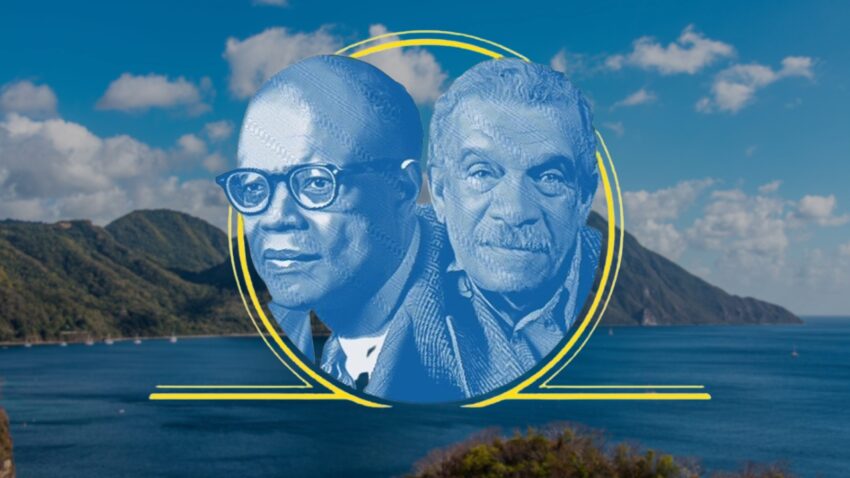
Sir William Arthur Lewis won the Nobel Prize in Economic Sciences in 1979. Sir Derek Alton Walcott received the Nobel Prize in Literature in 1992.
So, how did one island of this size produce two Nobel laureates whose work changed economics and literature?
Sir Arthur Lewis – Economist of Developing Nations
Detail
Information
Full name
Sir William Arthur Lewis
Born
January 23, 1915, in Castries
Died
June 15, 1991, in Bridgetown, Barbados
Nobel Prize
Economic Sciences, 1979
Co-recipient
Theodore W. Schultz
Field
Development economics
Affiliation at time of award
Princeton University
Sir William Arthur Lewis was Saint Lucia’s first Nobel laureate. Born on January 23, 1915, in Castries, then part of the British West Indies, he became one of the most important economists of the twentieth century. He died on June 15, 1991, in Bridgetown, Barbados.
Official Nobel wording honored Lewis and Schultz for pioneering research into economic development, with special attention to the problems of developing countries.
Lewis’s name is closely tied to the dual-sector model, one of the main approaches in development economics for many years.
His work examined labor productivity, terms of trade, and the movement of workers across economic sectors.
View this post on Instagram
It is important to know that Lewis was the first Black person to win the Nobel Memorial Prize in Economic Sciences.
Lewis’s work connects strongly to Saint Lucia’s economic history. Small postcolonial economies often face limited resources, exposure to outside shocks, trade dependence, and pressure to move labor into higher-productivity work.
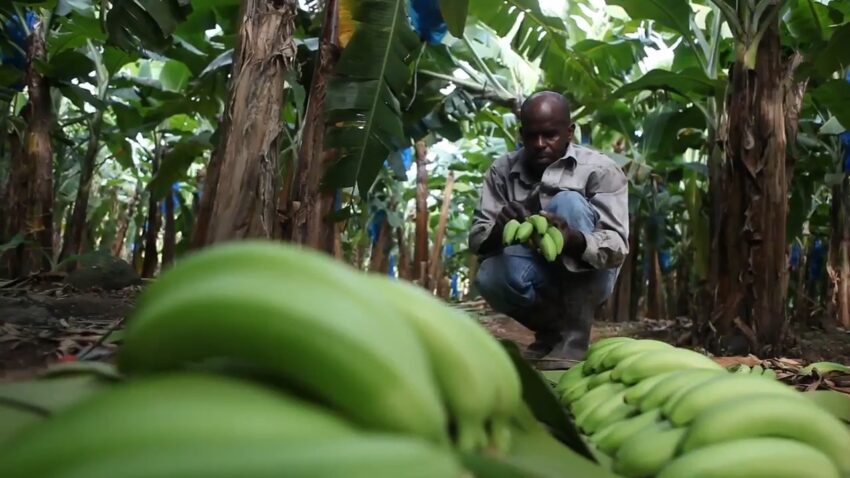
Saint Lucia has long depended on tourism, agriculture, and services. Bananas once played a major role in the economy, and the island was once among the region’s leading banana exporters. Castries historically shipped bananas and other agricultural products through its port.
Dependence on tourism and agriculture can leave the country exposed to weather events, travel disruptions, global price swings, and outside economic shocks.
Lewis’s Nobel-winning work addressed problems that small developing economies knew well: colonial inheritance, small markets, agricultural labor, education, trade dependence, and limited space for opportunity.
Sir Derek Walcott – Poet of Caribbean identity
Detail
Information
Full name
Sir Derek Alton Walcott
Born
January 23, 1930, in Castries
Died
March 17, 2017, in Saint Lucia
Nobel Prize
Literature, 1992
Field
Poetry and playwriting
Major themes
Caribbean culture, colonial memory, language, place, and identity
Major works
Dream on Monkey Mountain (1970), Another Life (1973), Omeros (1990)
Sir Derek Alton Walcott was Saint Lucia’s second Nobel laureate. Born on January 23, 1930, in Castries, he became one of the major poets and playwrights of the modern era. He died on March 17, 2017, in Saint Lucia.
Walcott received the Nobel Prize in Literature in 1992. His writing examined Caribbean culture, colonial memory, language, place, and identity.
His Nobel Prize honored a poetic body of work marked by luminosity, historical vision, and multicultural commitment.
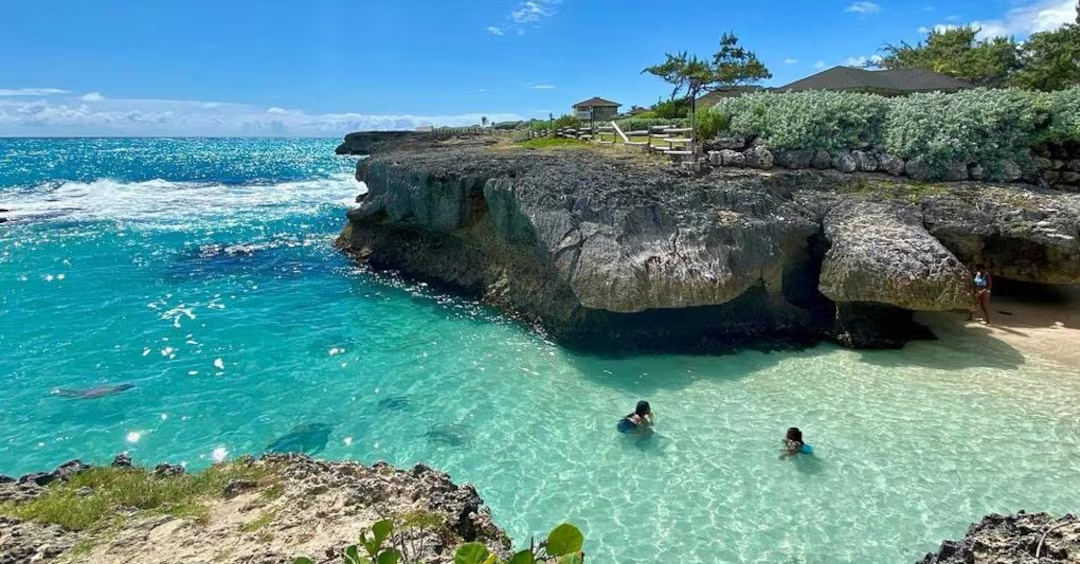
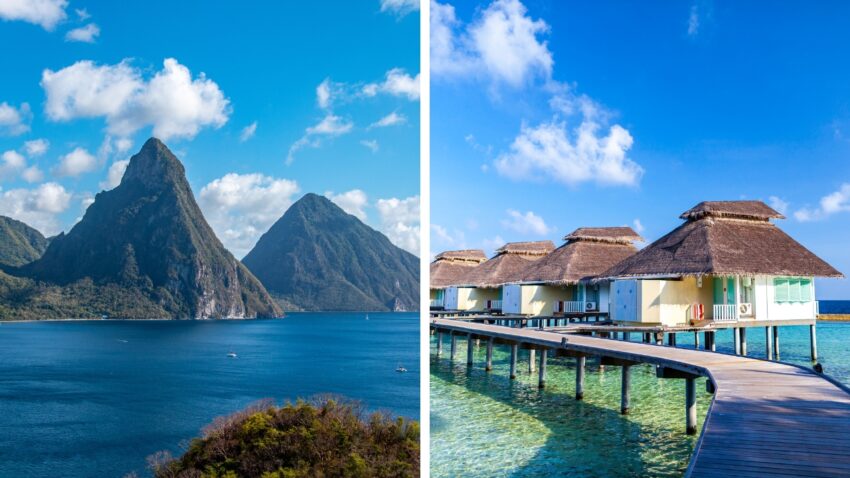
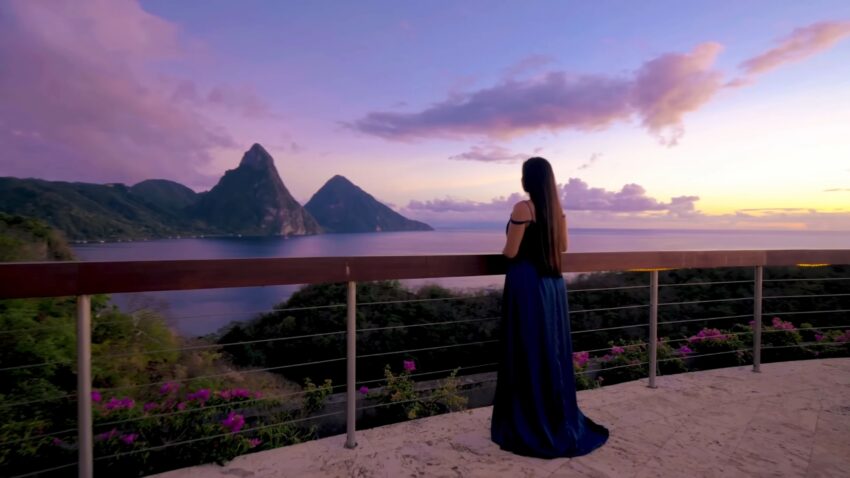
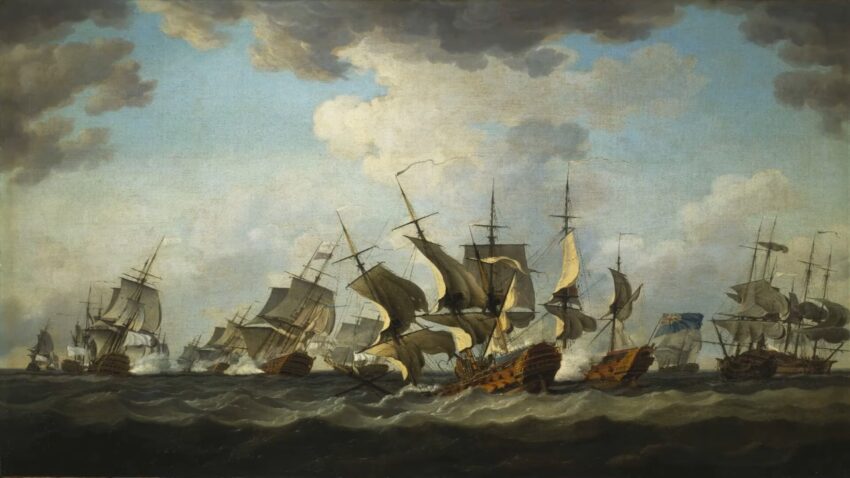
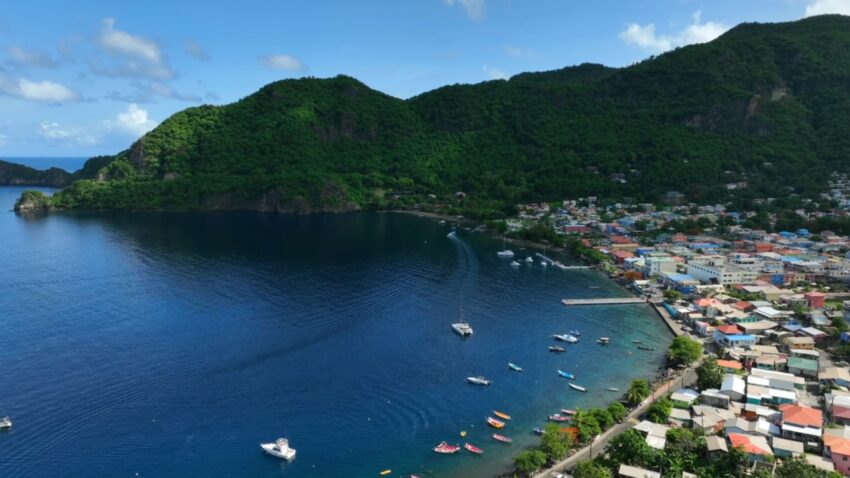
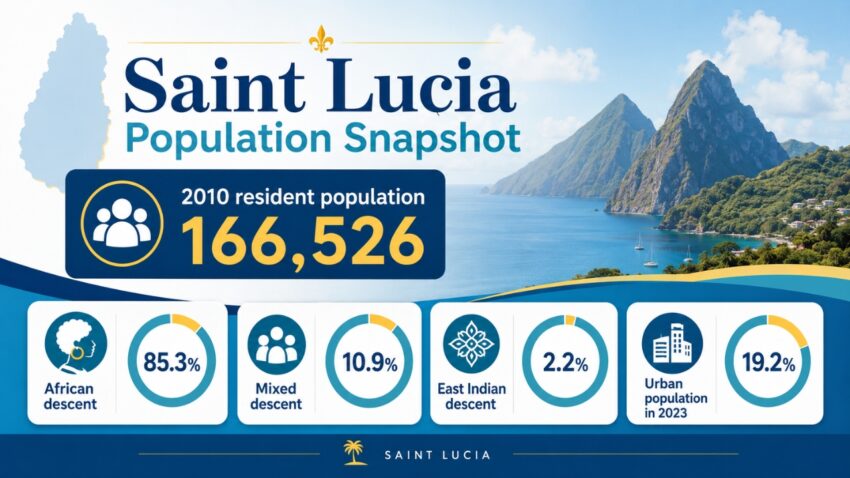
Omeros is often treated as one of his central achievements. In that work, epic tradition meets Caribbean geography, memory, and history, turning island life into material for world-scale poetry. Saint Lucia gave Walcott a world of language and memory. English, Kwéyòl, French influence, African heritage, and colonial history all shaped the cultural environment behind his art. Walcott belonged to a broader artistic culture of writers, painters, oral performers, and musicians. Saint Lucia sits in the West Indies as the second-largest of the Windward Islands. It lies in the Caribbean Sea between Saint Vincent and Martinique, about 24 miles south of Martinique and about 21 miles northeast of Saint Vincent. International attention often centers on beaches, volcanic terrain, resorts, and the Pitons. Saint Lucia’s intellectual identity deserves equal attention because a country near 180,000 people produced two Nobel laureates in separate fields. Indigenous peoples, including the Arawak and later the Carib, inhabited Saint Lucia before European colonization. France and Great Britain fought for control across the seventeenth, eighteenth, and nineteenth centuries. Spain and the Netherlands also attempted colonization. Claims that Christopher Columbus visited the island in 1502 have been challenged or rejected by historians. Across colonial centuries, Saint Lucia changed hands 14 times between Britain and France. Because of that history, it has sometimes been called the Helen of the West. British rule became official in 1814. Full independence came in 1979. Saint Lucia is a member of the Commonwealth. English is the official language. Many Saint Lucians also speak Kwéyòl, a French-based Creole used in daily life. Together, those languages show a national identity shaped by British institutions, French influence, African heritage, Indigenous history, and Caribbean self-definition. Population data adds social context: Castries is central to the Nobel story. It is the capital, largest city, commercial center, and home to the island’s largest port and best natural harbor. Both Lewis and Walcott were born there. Saint Lucia’s two Nobel laureates are more than a national bragging point. They show how much intellectual output can come out of a country with limited physical scale. Lewis made developing economies central to global economic thought. Walcott made Caribbean history, language, and memory central to world literature. Both came out of the same small island, and both spoke to global systems: empire, labor, development, language, memory, and identity. Pitons may be Saint Lucia’s most visible symbols, but Lewis and Walcott form another pair of peaks: one in economics, one in literature. Saint Lucia proves that a country can be geographically small and intellectually enormous.
Saint Lucia – Small Place, Layered History
A Small Island with an Outsized Voice