Soft Caribbean light reaches the water before beach chairs move, kitchens open, or boat engines cut across the bay.
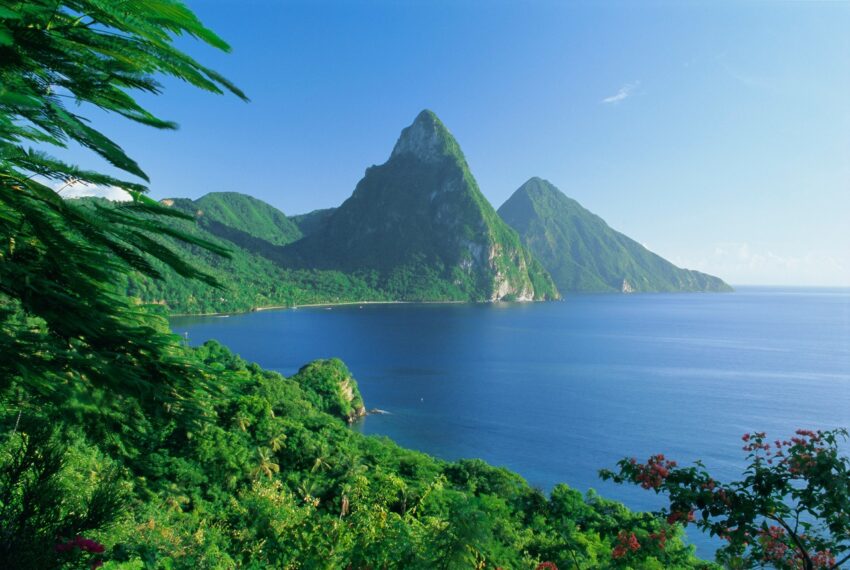
Gros Piton and Petit Piton rise in shadow near Soufrière, their green sides still muted by humid morning air.
St. Lucia’s Twin Peaks are impressive at any hour, but dawn gives them a rare quiet. Early light makes their slopes look sharper, calmer, and more dramatic. Before breakfast, they feel less like a famous sight and more like a private meeting with the island.
St. Lucia is often praised as one of the Caribbean’s most beautiful islands. Dawn explains why without much effort.
What Makes St. Lucia’s Twin Peaks So Iconic
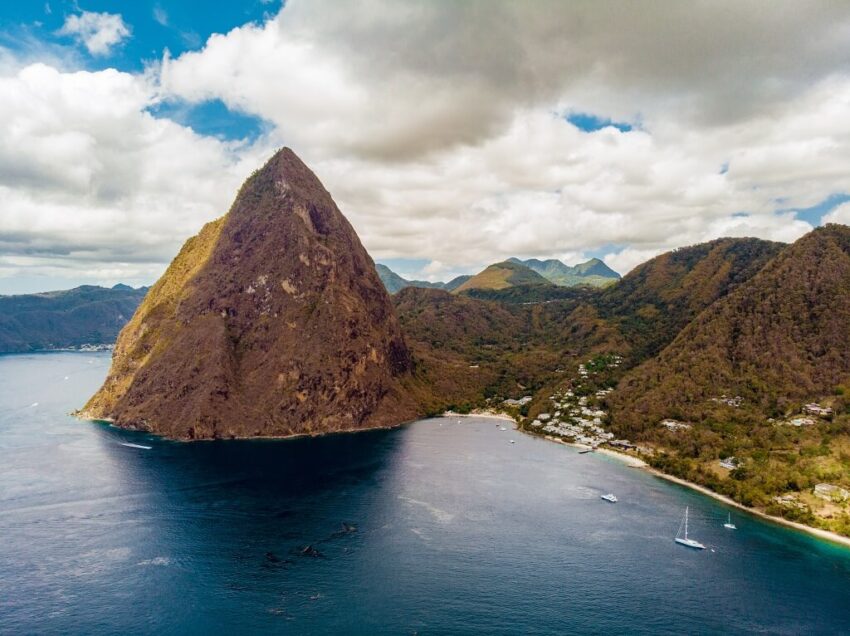
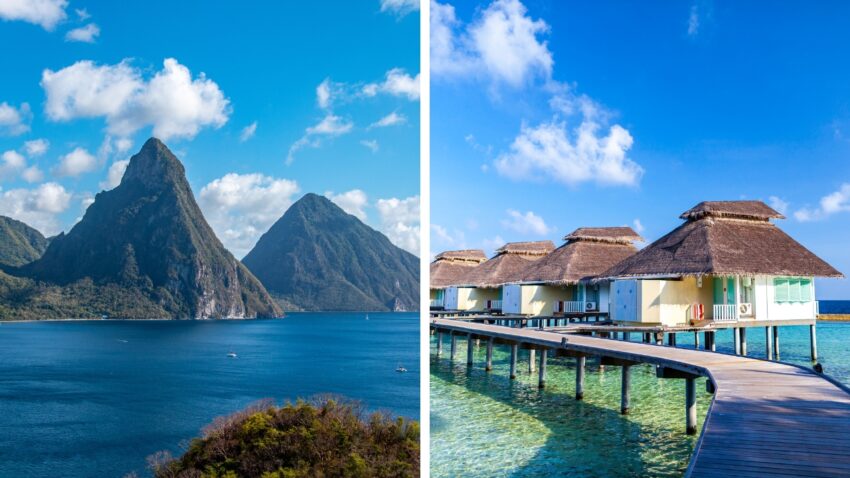
Gros Piton and Petit Piton create St. Lucia’s most recognizable silhouette. Their steep volcanic sides, covered in lush vegetation, appear to rise almost straight out of the Caribbean Sea.
Scale matters here. Gros Piton reaches around 771 meters, or 2,530 feet. Petit Piton rises around 743 meters, or 2,438 feet. Piton Mitan Ridge connects them, giving the pair a powerful shape near the coast.
Useful geological details add context without reducing the drama:
- Both peaks are volcanic plugs.
- Cooled lava once blocked volcanic vents, then hardened into towering rock forms.
- Nearby Sulphur Springs Park has hot springs and fumaroles tied to local geothermal activity.
- Surrounding areas include rainforest, cocoa plantations, clear water, and beaches with sand ranging between white and black.
Morning makes those details visible in layers. Green slopes brighten slowly. Blue water gains color. Mist breaks apart along the ridges. St. Lucia’s Twin Peaks feel massive, but not distant.
Why Dawn Is the Best Time to See Them
View this post on Instagram
Dawn gives Gros Piton and Petit Piton better light. Sunrise adds gentle color and shadow, so ridges, vegetation, and rock faces look more sculptural than they do under strong midday sun.
Morning also brings a calmer mood. Day tours have not fully gathered. Boat traffic is lighter. Resort paths are quieter. Beaches have more open space. That quiet makes St. Lucia’s Twin Peaks feel more personal.
Heat is another reason to start early. Tropical warmth can build quickly later in the day, especially near roads, beaches, and hiking paths. Before breakfast is a better hour for a short walk, a swim, a boat view, or an unhurried photo stop.
A first view can feel almost physical. One peak appears along a winding, palm-lined road, then the second peak comes into sight. That delayed reveal is part of the power. St. Lucia’s Twin Peaks are not just seen. They arrive.
Arrival, Roads, and Sudden Reveal
Anticipation shapes the experience near Soufrière. Roads bend past palms, hillsides, and small coastal scenes. Then Gros Piton appears ahead. Moments later, Petit Piton changes the whole view.
A rough road with potholes can still create a memorable approach because the view builds slowly. Palm trees frame the route. Curves hide and reveal the peaks. Early morning keeps the scene cooler and less crowded.
A sunrise transfer near Soufrière can turn a practical ride into one of the strongest moments of the trip. Safe roadside stops also matter, because some of the best views are not formal lookout points. They happen when a driver pulls over and gives travelers a minute to take in the scale.
Air arrival can set the tone too. A descent into Hewanorra Airport may show volcanic peaks, bright water, and green interior before travelers ever reach Soufrière.
Best Dawn Viewpoints
Now, let us take a look at the best dawn viewpoints of Gros Piton and Petit Piton.
By Water
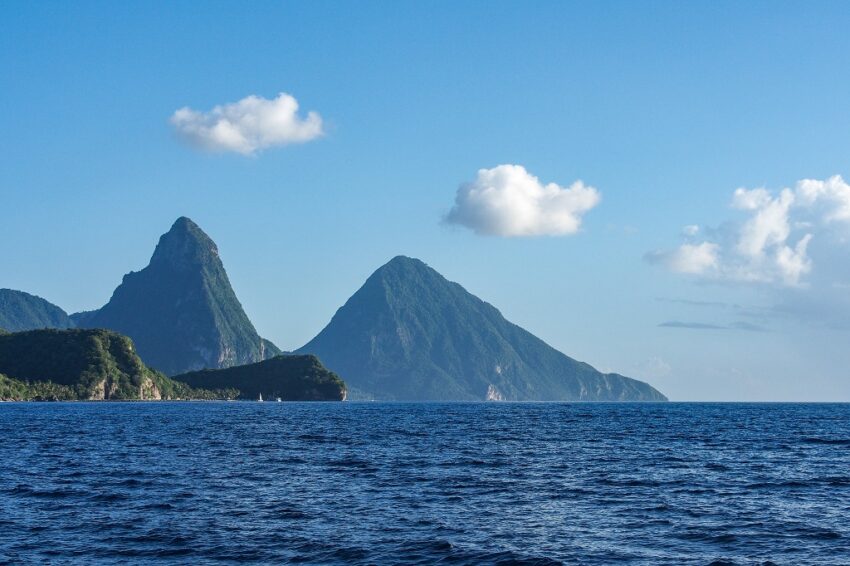
An early boat or catamaran view gives St. Lucia’s Twin Peaks their full scale. Seen by sea, Gros Piton and Petit Piton rise sharply above the coast, with open water making them look even taller.
Sea views work especially well at dawn because the water is often calmer and the light is softer. A catamaran cruise can pass the peaks with enough distance to see their shape, spacing, and height at once.
A strong dawn boat plan should focus on timing and angle:
- Start early enough to catch soft light on the slopes.
- Choose a route that passes both Gros Piton and Petit Piton.
- Keep time open for photos, not just transit.
- Look back toward the coast after passing the peaks, since the profile can change quickly.
Seeing the peaks by water after viewing them by road adds a second perspective. Land gives surprise and sea gives scale.
Sugar Beach
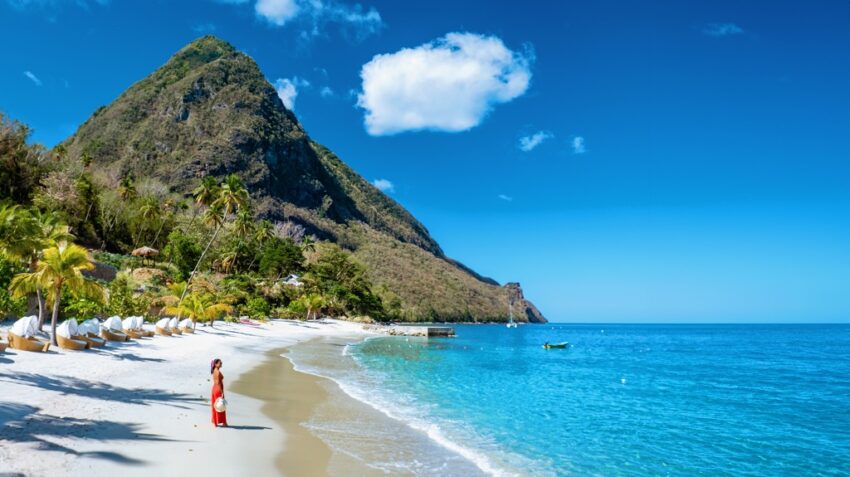
Sugar Beach is one of the clearest places to see St. Lucia’s Twin Peaks before breakfast. White sand, calm water, and close views make it ideal for a quiet swim or slow walk.
Gros Piton faces the beach directly, giving swimmers a dramatic view of the volcanic slope. Petit Piton adds sharper height nearby. Morning keeps the setting peaceful before more visitors arrive.
Access matters here. Sugar Beach is connected to a private resort, but day visitors can go there. Early arrival makes that visit feel easier and more relaxed.
A simple morning rhythm works best: walk the sand, swim while the peaks are still soft with dawn light, then have coffee with the view still in sight.
Hotel Terrace or Breakfast Spot
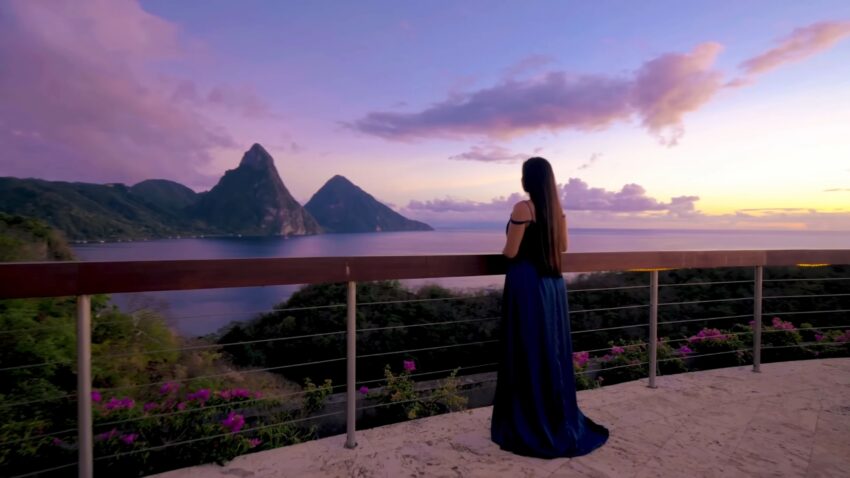
A terrace near Soufrière can be the easiest way to see St. Lucia’s Twin Peaks without planning a demanding outing. Elevated restaurant and hotel views give comfort, shade, and a steady look at the peaks as morning brightens.
View this post on Instagram
La Haut’s restaurant terrace is a strong land-based viewpoint. It offers a broad view of Gros Piton and Petit Piton with the sea and the coast nearby.
Several stay options are known for peak views:
- Jade Mountain is a luxury choice with dramatic views toward the Pitons.
- Green Fig Resort & Spa offers sea views that include Gros Piton and Petit Piton.
- Coastal breakfast spots near Soufrière can make the view part of the meal rather than a separate excursion.
Morning coffee works well here because it slows the experience down. No rush is needed when the best part of breakfast is already in front of you.
Roadside Near Soufrière
Roadside views can be more moving than planned stops. Near Soufrière, safe pullouts can give a sudden, open look at Gros Piton and Petit Piton without crowds or ticketed access.
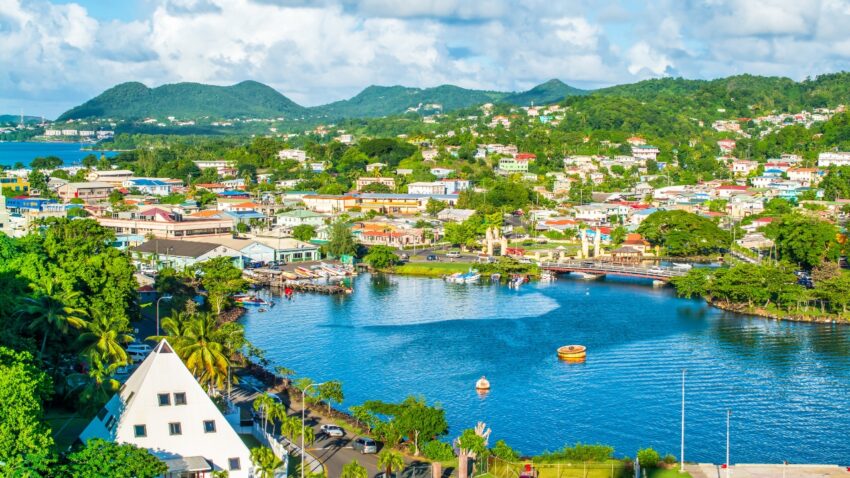
Soufrière is the main base for this kind of view because it sits close to the peaks, Sugar Beach, Sulphur Springs Park, and coastal roads. Early morning makes roadside viewing easier, with lighter traffic and better light.
A short stop can be enough. Step out, look up, take a few photos, then let the view settle before moving on.
Should You Hike Before Breakfast?
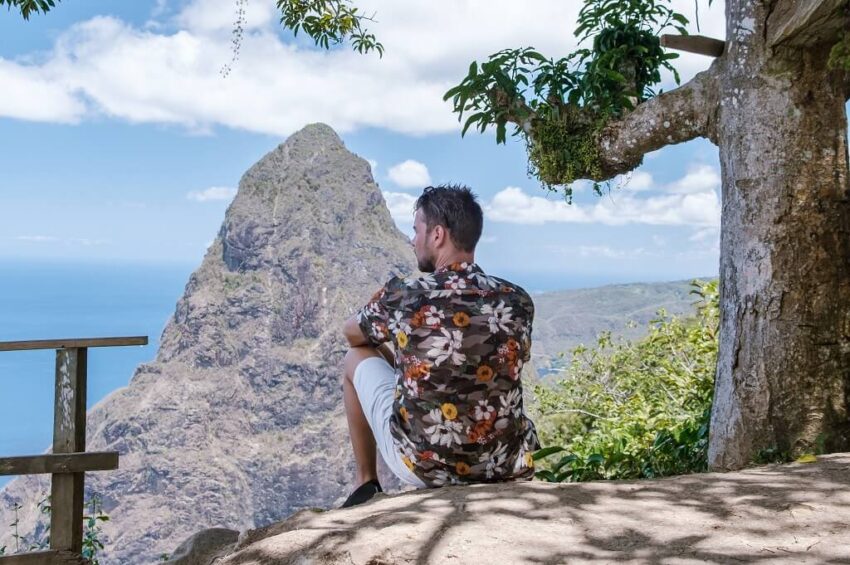
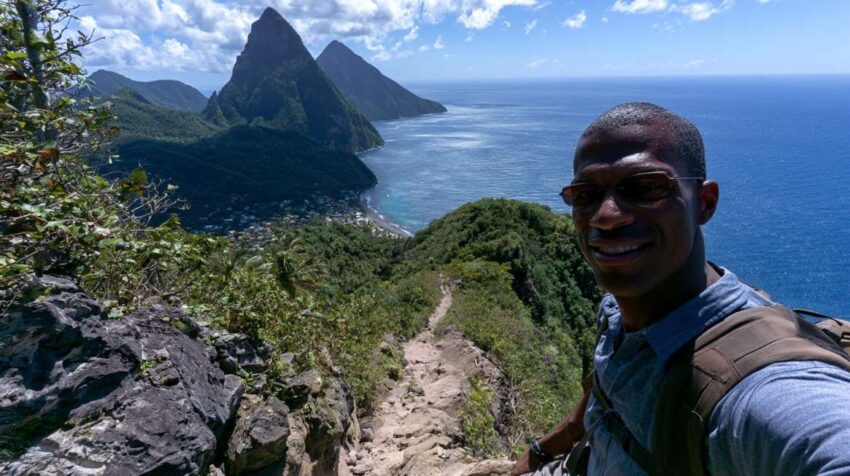
Hiking Gros Piton is possible, but it is not a casual sunrise walk. Marked trails begin near Fond Gens Libre, and the climb is often described as a two to three-hour hike. A safer plan allows two to three hours each way because the route has uneven paths and steep inclines.
Petit Piton is more demanding and less straightforward. Its trail is not marked the same way, so travelers should not treat it as a quick morning activity.
Active travelers should plan around these practical points:
- Use a local guide for a summit attempt.
- Wear proper footwear with grip.
- Carry enough water.
- Start early to avoid stronger heat.
- Do not rush the climb to fit a breakfast schedule.
For most visitors, dawn is better for viewing, photography, boating, or swimming. St. Lucia’s Twin Peaks reward attention even without a summit.
Closing Thoughts
Morning changes Gros Piton and Petit Piton slowly. Shadow turns green. Water brightens. Roads wake up. Beaches begin to fill. Boat engines start moving along the coast.
Before that, daily motion begins, St. Lucia’s Twin Peaks have their strongest mood.
Their volcanic origin, UNESCO World Heritage setting, and height above the southwest coast make them important. Dawn makes them unforgettable.
Seen during an airport approach, revealed along a palm-lined road, viewed at Sugar Beach, or approached by boat, Gros Piton and Petit Piton define St. Lucia at first light. Breakfast can wait. First light on St. Lucia’s Twin Peaks cannot.