Buying property in St. Lucia can give foreign buyers access to freehold ownership, vacation-home use, rental income potential, and long-term asset value.
St. Lucia covers about 238 square miles, yet property choices vary by area, price, access, and use. Buyers can compare northern resort areas, southern districts near Hewanorra International Airport, coastal homes, inland land, condos, villas, and suburban neighborhoods.
Foreign nationals can buy property in St. Lucia, but most non-citizens need an Alien Landholding Licence.
Buyers should also plan for closing costs, taxes, legal fees, inspections, insurance, and a licence timeline that can take three to six months.
Can Foreigners Buy Property in St. Lucia?
Foreign nationals can legally purchase and own freehold property in St. Lucia. Freehold ownership gives the buyer full ownership rights in the land and structures.
Freehold owners may sell, lease, pass on, or use the property, subject to local laws, planning rules, and property-specific restrictions.
St. Lucia does not place broad nationality restrictions on foreign buyers. Overseas investment is common in residential, vacation-home, resort, and rental property segments.
Local law has roots in English common law, which may feel familiar to buyers used to legal systems in the United Kingdom, Canada, and other common-law jurisdictions.
St. Lucia has no capital gains tax on property sales. St. Lucia also has no inheritance tax, which can matter for long-term owners and estate planning.
For most buyers, that means getting an Alien Landholding Licence before ownership is fully valid.

Big Legal Requirement
An Alien Landholding Licence, often shortened to ALHL or AHL, is the main legal approval required for most non-citizens buying property in St. Lucia.
Licence approval is important because a foreign buyer generally cannot complete valid ownership without it. ALHL approval applies to a specific property, so another purchase requires another licence.
Certificate of Eligibility fees are listed at US$3,000 for one-year validity or US$10,000 for ten-year validity.
ALHL licence fee data varies. One listed figure gives an ALHL fee of US$5,500, with lifetime validity and no renewal requirement after approval.
Another fee description says the Alien Landholding Licence starts at US$5,000 for properties up to one acre and may rise to US$50,000 for properties over 100 acres.
Buyers should confirm current fees with a St. Lucian attorney or the relevant authority before signing. Cost can depend on the current government schedule, property size, and transaction details.
Typical documentation may include passport copies, proof of address, a police clearance certificate, bank statements, property details, and purchase information. Company buyers should expect to provide incorporation documents, director details, and beneficial owner disclosure.
Full ALHL processing commonly takes three to six months. Buyers should build that timing into the offer, Sales Agreement, financing plan, and closing schedule.
Buying Process, Step by Step

A typical purchase begins with a property search and a written offer through a qualified local real estate agent. Agents usually help negotiate price, terms, timing, and seller expectations.
Legal support should start early. A St. Lucian solicitor or attorney-at-law should review the transaction before major commitments are made.
An attorney should handle title checks, due diligence, conveyancing, licence preparation, licence submission, and communication with relevant government offices.
After price and terms are agreed, buyer and seller usually sign a Sales Agreement. It should state the purchase price, deposit amount, completion timeline, and key transaction conditions.
A deposit is commonly about 10% of the purchase price. Deposit funds are usually held in escrow while legal checks and licensing steps continue.
After the offer terms and property details are in place, the buyer applies for the Alien Landholding Licence.
Completion includes registration of ownership at the Land Registry. After registration, the buyer receives title documents.
@ghgcaribbeanrealestate PART 1: How to buy property in beautiful St Lucia in 6 easy steps #foreigninvestment #foreignrealestate #realestate #investmentrealestate #luxury #lux #luxurylife #realestateagent #realestatetiktok #luxuryrealestate #stluciahomes #stluciarealestate #beautiful #stluciavillas #goldenhourgroup #ghgrealestate #caribbeanrealestate #realestateinvesting #realestateinvesting #realestateinvestor #realestateinvestment ♬ original sound – Golden Hour Group
- Search listings
- Make an offer
- Apply for the licence
- Sign the purchase agreement
- Pay the purchase price and taxes
- Register ownership with the Land Registry
Do Not Budget Only for the Purchase Price
Purchase price is only part of the cost of buying property in St. Lucia. Foreign buyers should build a complete budget before making an offer.
Main cost categories include:
| Cost item | What it covers |
|---|---|
| Alien Landholding Licence fee | Required licence cost for most non-citizen buyers |
| Certificate of Eligibility fee | Initial eligibility approval cost before the full licence application |
| Attorney or solicitor fees | Legal review, due diligence, conveyancing, and licence support |
| Stamp duty | Government tax payable on the property purchase |
| Registration fees | Cost to register ownership at the Land Registry |
| Transfer tax | Tax connected with transferring property ownership |
| Valuation | Professional estimate of property value |
| Inspection | Review of property condition before completion |
| Insurance | Property coverage required for ownership and risk protection |
| Property management | Ongoing support for maintenance, rentals, cleaning, and guest turnover |

Estimated Buyer Costs to Check Before Signing
Several fees can materially change the total cost of buying property in St. Lucia, especially for foreign buyers who need licence approval.
| Cost or fee | Listed amount or range |
|---|---|
| Certificate of Eligibility | US$3,000 for one-year validity or US$10,000 for ten-year validity |
| Alien Landholding Licence | US$5,500, or starting at US$5,000 for properties up to one acre |
| Legal fees | 0.5% to 2.5%, or 1% to 3% of the purchase price plus 17.5% VAT |
| Stamp duty | 2% |
| Registration fees | Around US$1,500 |
| Transfer tax | Up to 5% for St. Lucian citizens and CARICOM members, and up to 10% for non-nationals |
| Home inspection | US$500 to US$1,000 |
| Real estate agent commission | Typically 5% of the purchase price |
| Residential property tax | 0.25% of market value annually |
| Commercial property tax | 0.4% of market value annually |
| Land tax | 0.1% annually |
Buyers should confirm current fees with a St. Lucian attorney before signing, since government charges, legal fees, and transaction costs can vary by property size, ownership structure, and current rules.
Choosing the Right Location
Location affects lifestyle, rental income, resale value, convenience, and long-term ownership cost. A strong view may not offset poor road access, weak rental demand, or difficult maintenance.
- Airport access can affect personal use, guest convenience, and short-stay rental demand.
- Nearby restaurants, beaches, shopping, medical care, and services can support both lifestyle value and resale strength.
- Road quality can matter as much as distance, especially for hillside homes, villas, and land parcels.
- Property management access can affect cleaning, repairs, guest turnover, inspections, and emergency response.
- Rental performance may change by season, property type, amenities, and neighborhood popularity.
Northern Areas
Rodney Bay is a busy northwest area with shops, restaurants, bars, nightlife, beaches, and watersports.
Example pricing includes one-bedroom apartments starting near US$300,000, gated-community one-bedroom condos starting near US$200,000, and luxury beach villas starting near US$2 million.
Cap Estate is a prestigious northern residential area with a golf course, luxury villas, apartments, and interest among retirees and second-home buyers.
Buyers considering Cap Estate often compare privacy, security, community amenities, and access to Rodney Bay.
Western and Southwestern Areas
Marigot Bay is a scenic southwest bay known for luxury villas, honeymoon traffic, and celebrity interest.
Example pricing includes rainforest villas starting near US$1 million, three-bedroom apartments starting near US$500,000, and luxury resort condos starting near US$400,000.
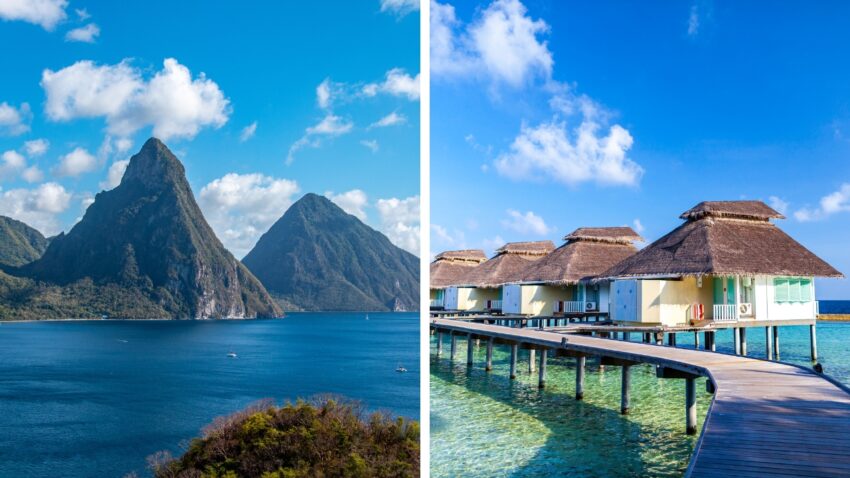
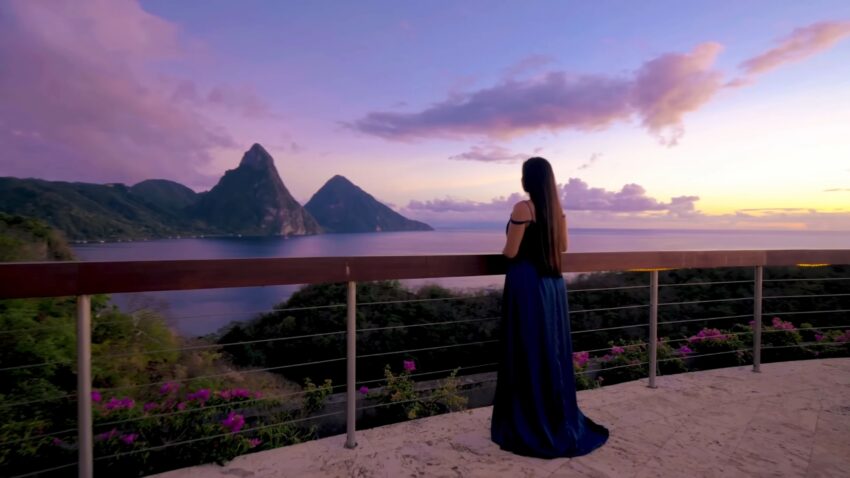
Soufrière sits on the western and southwestern side of the island near the Pitons, Diamond Botanical Gardens, and Sulphur Springs.
Example pricing includes ocean-view villas starting near US$1.5 million, two-bedroom apartments starting near US$400,000, and two-bedroom condos with Piton views starting near US$300,000.
Southern Areas
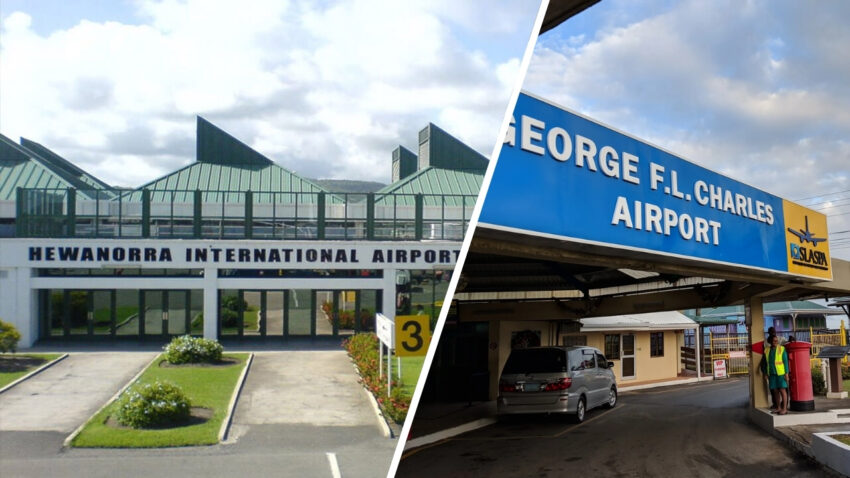
Vieux Fort is a southern district and home to Hewanorra International Airport. It is often described as a more affordable real estate option compared with some northern and resort-focused areas.
Southern areas can be practical for buyers who want faster airport access. Sandy Beach and Anse des Sables also add beach access in the south, while pricing may be lower than in some of the most active resort areas.
Island Access and Local Fit
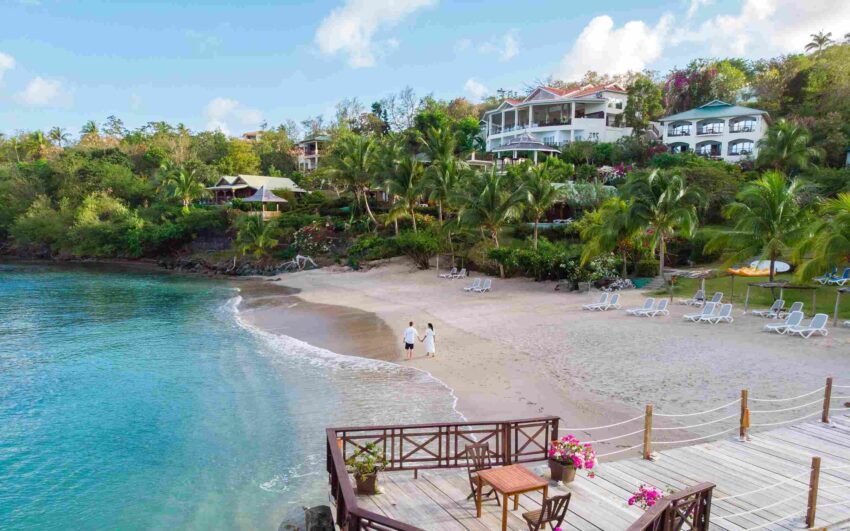
Northern areas are popular with visitors, but sit farther away in relation to the main international airport.
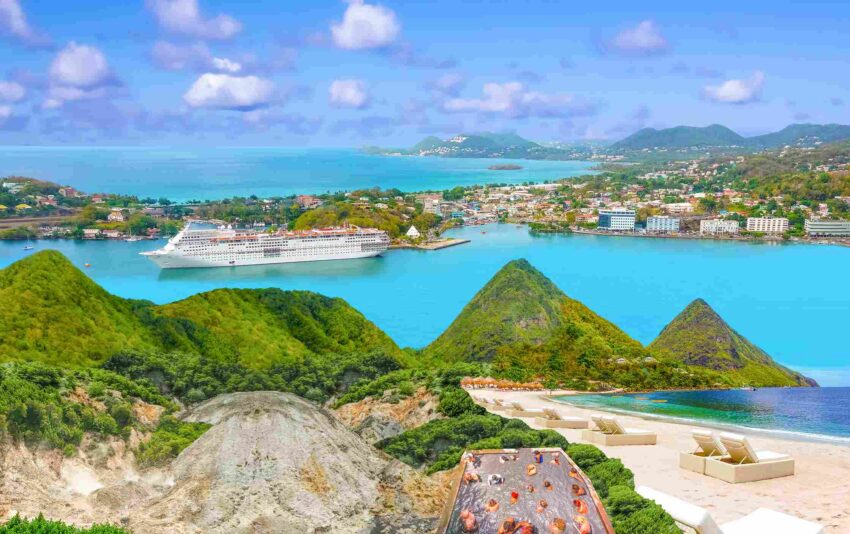
Southern areas offer easier access to Hewanorra International Airport. Western coastal areas include Soufrière, the cruise ship port, and the Pitons.
- Slope and buildability for land or hillside homes
- Drainage and exposure to heavy rain
- Noise near roads, nightlife, construction, or commercial activity
- Maintenance logistics for pools, gardens, roofs, decks, and access roads
- Beach access, restaurants, shopping, and medical care
- Rental demand and guest access for income-focused purchases
Closing Thoughts
Buying property in St. Lucia is legally possible for foreign nationals, but most non-citizens need an Alien Landholding Licence.
Licence approval can take three to six months. Closing costs, taxes, legal fees, insurance, inspections, and ongoing property expenses should be included in the budget before an offer is made.
A good purchase depends on a clear title, accurate cost planning, practical location review, and qualified local legal support.