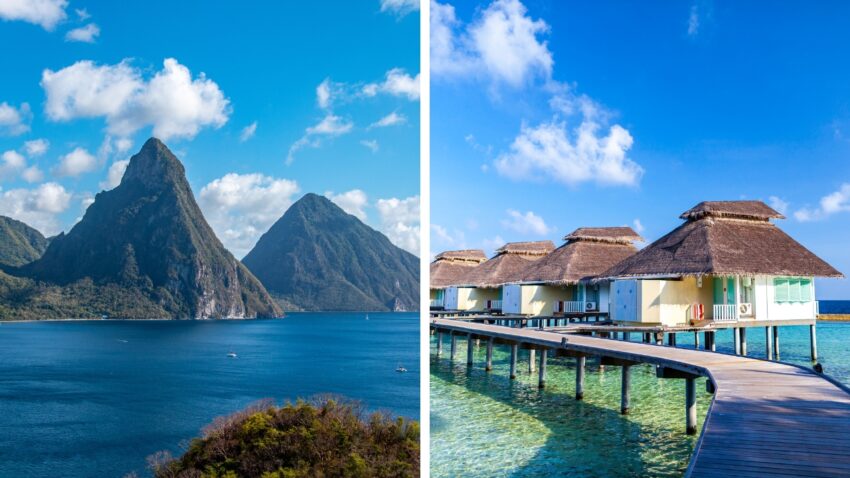
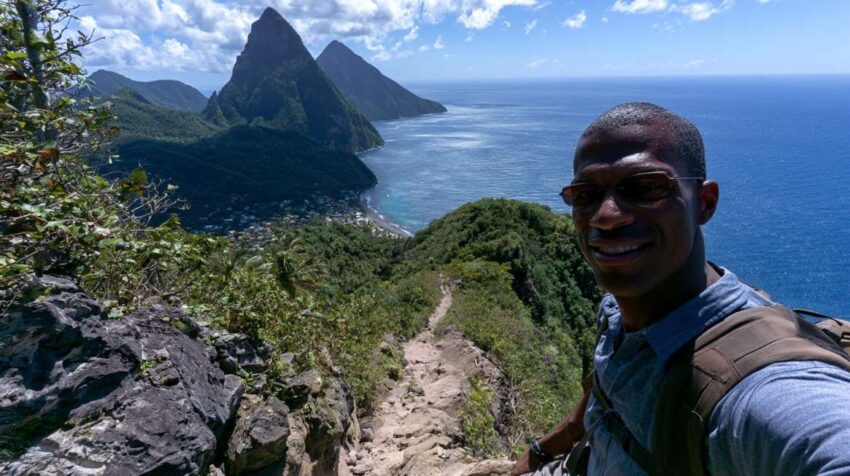
I would call Gros Piton doable, but definitely tough. It is not some extreme climb meant only for serious athletes, but it is also not an easy vacation hike you can casually knock out after breakfast with no thought.
I would rate it around 7 to 8 out of 10 for difficulty. Some give it an 8 out of 10, and that feels fair to me because not every hiker makes it all the way to the top.
People describe it in very different ways. Some say it feels moderate. Others say it is genuinely hard. I think that difference mostly comes down to hiking experience, incline fitness, heat tolerance, and pace.
A person used to steep trails may handle it pretty well. A casual traveler who mostly walks on flat ground may get humbled fast.
My honest take is that Gros Piton is not brutal, but it is harder than most vacationers expect.
Quick Hike Facts
When hiking Gros Piton, I would not let the short distance fool me. Gros Piton sits near Soufrière in St. Lucia, and the route is a steep out-and-back hike with a lot of climbing packed into a small amount of trail.
- The distance sits around 2.9 miles total
- One hiker logged a starting point near 679 feet
- The summit elevation was recorded at 2,645 feet
- Climb time in that example was just under 2 hours
Most people should plan on about 4 to 6 hours total. Some hikers report around 1.5 to 2 hours up and 1.5 to 2 hours down, while another example came in at about 4.5 hours total.
A guide is required or at least strongly expected. I would not count on being allowed to start without one. One listed cost is $50 per person, with a hiking-stick rental at $10.
The trail layout is simple in a helpful way. It is split into four quarters, with stops, benches, or rest points along the route.
I like that setup because it gives you smaller goals instead of making the summit feel like one long push.
Why It Feels Hard
Hiking Gros Piton feels harder than the distance suggests because the climb gains elevation fast, and a lot of the route feels like it goes straight up.
Forest shade helps, but St. Lucia’s heat and humidity still wear you down. Even with tree cover, sweat builds quickly, breathing gets heavier, and water starts to matter early.
- Dirt sections can feel loose in spots
- Rock fields slow your pace
- Jagged edges make foot placement more important
- Large steps can burn your legs
- Handrails help in steeper areas
Upper parts get steeper, and the step-ups can feel big, especially for shorter hikers or tired legs. I would not treat the first half as proof that the whole hike will feel the same.
Going down is not exactly easy either. Descent can be awkward, rocky, and rough on the knees.
After rain, mud and slick rocks can make each step more careful. I would save energy for the way down instead of spending everything on the climb up.
Who Can Handle It?
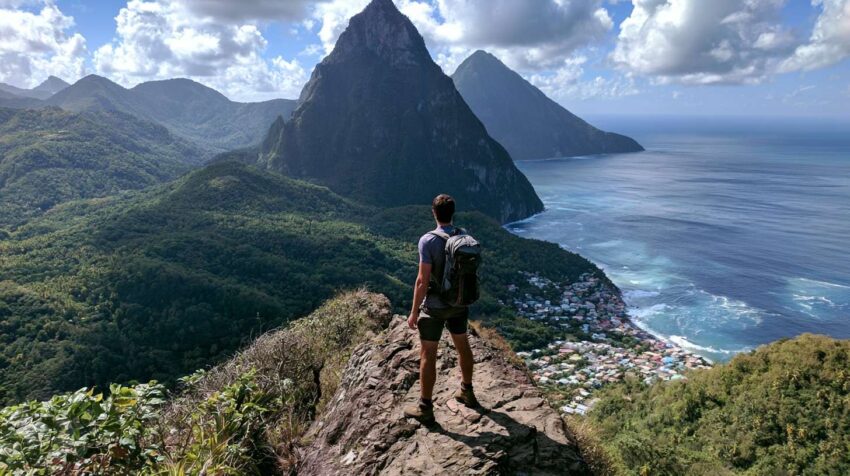
I think hiking Gros Piton is best for people with decent cardio fitness and some comfort on steep, uneven trails.
You do not need to be an expert, but you should be honest about your legs, lungs, and heat tolerance. Fit non-hikers can finish it, but gym fitness does not always carry over.
One hiker worked out consistently and still found it very hard because they were not used to mountain hiking. Stairs, incline, rocks, humidity, and uneven footing are a different kind of fitness.
- Regular hikers may find it moderate to hard
- Casual hikers may find it very hard
- Strong gym-goers may still struggle without incline practice
- Slow pacing can make a big difference
Anyone dealing with asthma, knee issues, rheumatoid arthritis, scoliosis, or poor heat tolerance should prepare carefully.
Lungs work hard on the climb, so asthma should be well-controlled before attempting it.
Halfway is a valid goal. Several people mention turning around there, and I think that is a smart option if the summit starts feeling like too much. No view is worth pushing past a safe limit.
What to Wear and Bring
I would wear sturdy sneakers at a minimum, but hiking shoes are better. Rocks, jagged edges, steep sections, and big steps make extra grip useful.
Light clothing makes the most sense. Shorts and a T-shirt are enough for most people. Long pants can feel too hot because the path is mostly cleared, and the humidity already makes the hike sweaty.
- 1 liter per person should be the bare minimum
- 3 liters is a safer choice for many hikers
- 5 to 6 bottles each may make sense in hotter conditions
Food matters too. I would not bring only water. Granola bars, light snacks, gels, chews, electrolytes, or even a sandwich can help if hunger hits during the hike.
Anyone wearing glasses may want a towel or contacts. One hiker mentioned sweat making glasses hard to keep clear, and I can see that becoming annoying fast.
Cash or a card is also useful for fees, guide tips, drinks, or ice cream at the bottom. After a hot climb, something cold sounds pretty reasonable.
View this post on Instagram
Tips to Make It Easier
I would start early, ideally around 7 to 8 a.m. Heat gets stronger later, and the 10 to 11 a.m. tour or cruise rush can make things busier.
Slow pacing helps a lot. I would make the guide match my speed, not the other way around. One smart tip was to take a step, pause, breathe, then continue. That kind of rhythm can keep the climb manageable.
- Use the handrails in the third and fourth quarters
- Keep your steps controlled on loose rock
- Take breaks before you feel cooked
- Let faster groups pass instead of chasing their pace
Energy management matters. I would not treat the summit as the finish line because the descent still takes effort. Long steps and rocks can beat up the knees on the way down.
Breakfast is a good idea before starting, and bringing food is smart. Starting hungry or under-fueled would make hiking Gros Piton feel worse than it needs to.
Rain changes the hike. Road access to the trailhead can be poor, the trail can get muddy, and rocks may become slippery. I would be extra careful after wet weather.
Is It Worth It?
View this post on Instagram
I would say yes, as long as you want a physical challenge and not just an easy viewpoint. Hiking Gros Piton feels like an accomplishment hike, not a casual photo stop.
At the summit, views can stretch over the Caribbean, southern St. Lucia, and, on a clear day, sometimes St. Vincent.
That said, the top may not be everyone’s favorite view. One seasoned hiker said the second rest point had the best shot, while the summit felt more about earning it.
I would skip it if I only wanted an easy scenic stop. St. Lucia has less exhausting ways to get beautiful views. For someone who wants a memorable climb and does not mind sweating for it, Gros Piton is worth considering.
The Verdict
I would not call Gros Piton extreme, but I would never call it easy. Short distance makes it look more approachable than it feels.
For fit travelers with hiking experience, it may feel moderate to hard. For casual vacationers or anyone unused to steep inclines, it can feel very hard.
The biggest challenges are the steep grade, humidity, rocky terrain, large steps, and knee-heavy descent. My honest rating is 7-8 out of 10, depending on fitness, weather, hiking experience, and pacing.