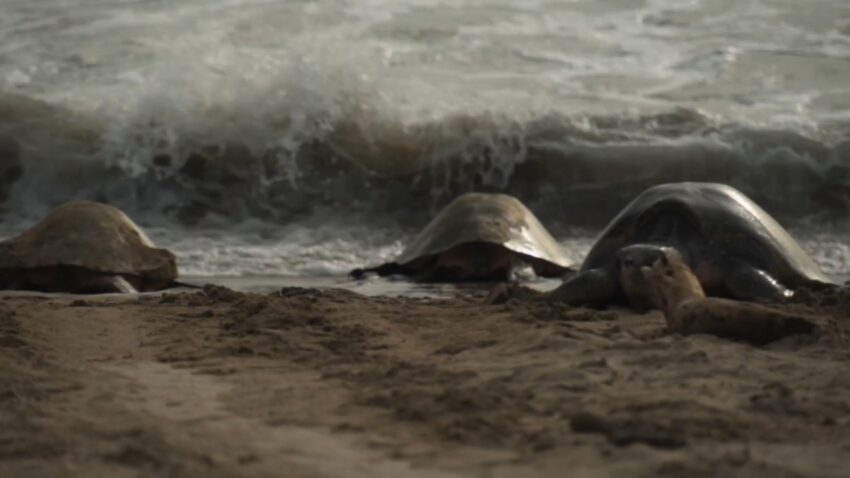
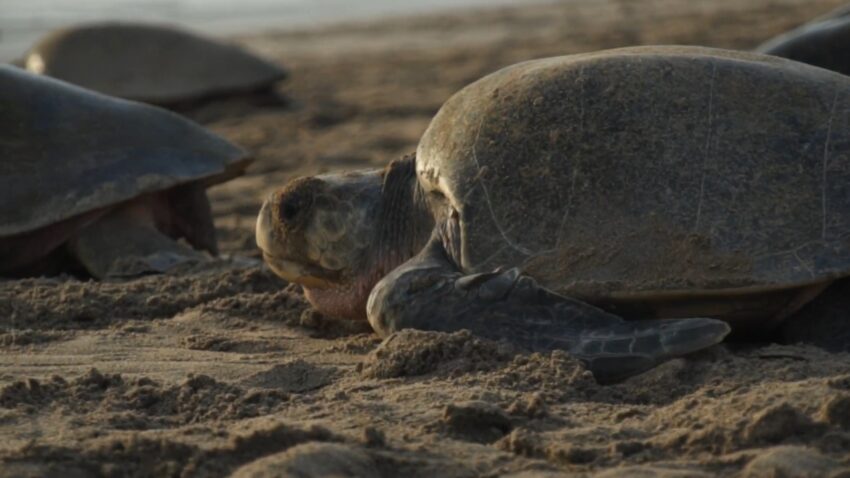
Grande Anse is one of Saint Lucia’s important sea turtle nesting beaches, especially for travelers who care about wildlife and careful coastal travel.
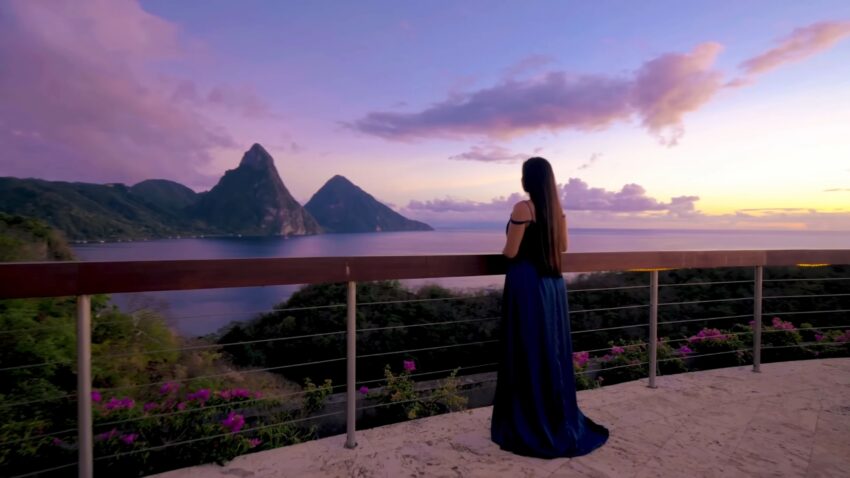
Located at 13.9100°, -60.8750°, Grande Anse has been listed as a National Park in Saint Lucia since 1994. Unlike a casual resort beach stop, Grande Anse is better treated as a wild, conservation-focused nesting area.
Visitors come here for quiet viewing, not beach-party energy or staged wildlife encounters. Every step, light, sound, and movement can matter when sea turtles are nesting.
Saint Lucia’s sea turtles are part of the island’s marine heritage. Sea turtles are reptiles. They breathe air, spend much of their lives at sea, and lay eggs on land. As ancient animals, sea turtles have lived in the world’s oceans for more than 150 million years.
Visitors usually ask two main questions about turtle season on Grande Anse:
First, when does sea turtle nesting happen?
Second, how can people see a nesting run without disturbing adult turtles, eggs, or hatchlings?
When Is Turtle Season in Saint Lucia?
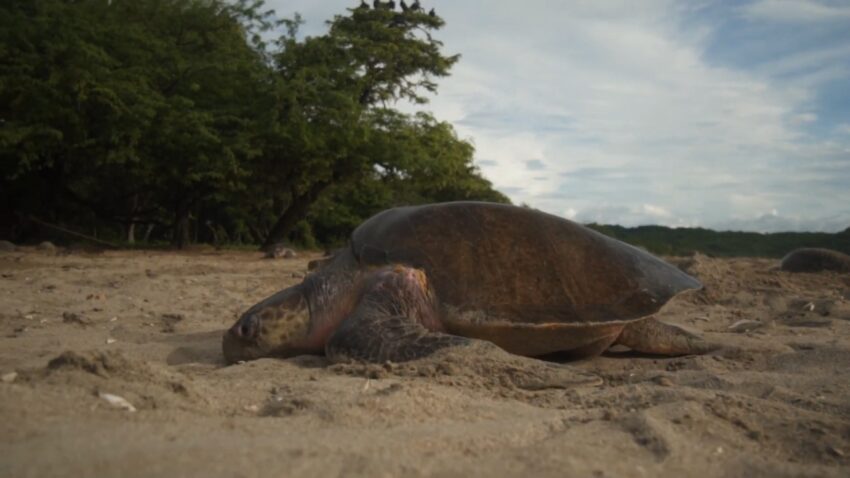
Turtle season on Grande Anse fits within Saint Lucia’s wider sea turtle nesting season, which runs from March to November. During those months, sea turtles may nest on Saint Lucian beaches, with nesting activity taking place mainly at night.
Nesting season has two main parts. Adult females come ashore to lay eggs during the nesting period. Later, baby turtles hatch beneath the sand and crawl toward the ocean during the hatching period.
Beach walks connected to turtle education and nest care may be offered during March to November at Coconut Bay, where guests can learn about nests and beach protection efforts.
Later-season visits may also bring a chance to see hatchlings. Around October, visitors may catch baby turtles making their way to the ocean.
Sea turtle eggs hatch after 6 to 13 weeks of incubation in warm beach sand. After hatching, baby turtles dig upward through the sand until they reach the beach surface. Then they crawl to the sea, guided by natural light over the ocean.
Sightings are never guaranteed. Turtle nesting and hatching depend on natural timing, tides, weather, beach conditions, and turtle behavior. A quiet night during peak season can still pass without a turtle appearing, while another night may bring nesting activity.
Which Sea Turtles Nest in Saint Lucia?
Three main endangered sea turtles nest in Saint Lucia: leatherback sea turtles, hawksbill sea turtles, and green sea turtles.
All three sea turtles nesting on Saint Lucian beaches, or found in Saint Lucian waters, are listed as Endangered or Critically Endangered on the IUCN Red List of Threatened Species.
Leatherback Sea Turtles
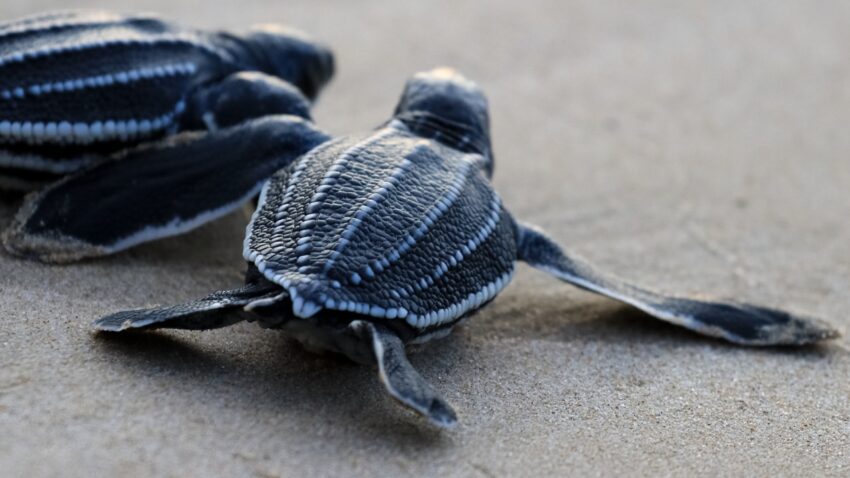
Leatherback sea turtles are the largest sea turtles. They can grow up to nine feet long and weigh up to 2,000 pounds.
Unlike hard-shell sea turtles, leatherbacks do not have hard scales. Their shell is black, leathery, and marked by seven ridges. Their flippers have no claws.
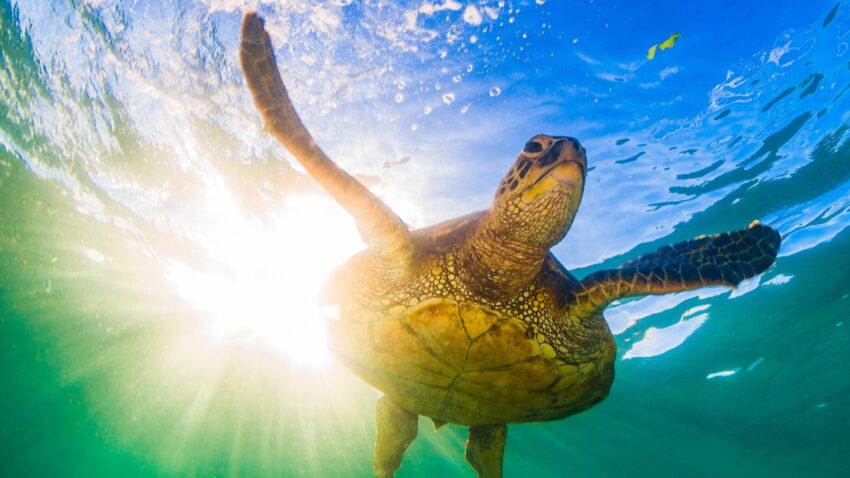
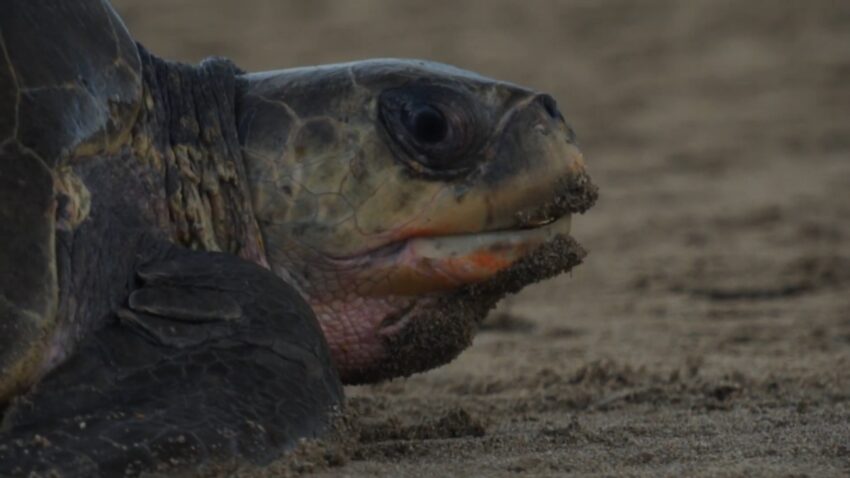
For many visitors, turtle season on Grande Anse means the chance to quietly witness leatherback nesting behavior on one of Saint Lucia’s key nesting beaches. Hawksbill sea turtles are the smallest sea turtles nesting in Saint Lucia. Adults can reach up to three feet long and weigh 60 to 200 pounds. Their narrow face and bird-like beak help identify them. Hawksbills tend to feed on marine sponges. Like green sea turtles, each flipper usually bears one claw. Green sea turtles are the largest hard-shell sea turtles in the world. Adults can exceed three feet long and weigh 200 to 500 pounds. Their shell is usually dark gray. Loggerhead turtles may be found in Saint Lucian waters, but they are not known to nest on Saint Lucia’s beaches. Grande Anse is one of Saint Lucia’s key places associated with turtle nesting, especially leatherback nesting. Leatherback activity has a strong connection with Grande Anse beach, making it a meaningful site during nesting season. National Park status adds to its importance. Since Grande Anse is a protected coastal area, visitors should treat it as a sensitive nesting habitat first and a scenic beach second. Human behavior can directly affect turtle survival, especially during nighttime nesting and hatchling movement. Visitors who want to see nesting sea turtles can join a sea turtle watch at Grande Anse beach by contacting Heritagetours. Useful contact details are: A guided turtle watch is the responsible way to experience turtle season on Grande Anse. Independent nighttime beach walks can disturb turtles, damage nests, and create safety problems for visitors. Organized turtle watching gives visitors a better chance to view nesting behavior while following rules that protect turtles. Guides can tell guests where to stand, when to move, and when silence is most important. March to November is the best window for turtle season on Grande Anse. Adult sea turtles usually come ashore at night, so a nighttime guided turtle watch offers the best viewing opportunity. Adult sea turtles are timid. A turtle may leave the beach if people disturb her before she begins nesting. Noise, movement, bright lights, crowding, and people walking too close can cause problems before eggs are laid. A nesting turtle may take a long time to complete the process. She may come ashore, pause, choose a nesting spot, dig a nest chamber, lay eggs, cover the nest, disguise the area, and return to the sea. Quiet patience is part of the experience. Planning more than one possible night can help manage expectations. Turtles do not nest on a fixed schedule. Later-season visits, especially around October, may offer a chance to see baby turtles moving toward the ocean. Even then, hatchling sightings cannot be promised. Goal-setting matters. A turtle watch should focus on witnessing natural behavior quietly, not forcing, staging, or rushing an encounter. Artificial light is one of the biggest threats to successful sea turtle nesting and hatching. During turtle season on Grande Anse, visitors and beachfront properties should reduce lighting as much as possible. Do not shine flashlights at sea turtles. Do not use phone lights near turtles or nests. Do not use the camera flash. Artificial light can confuse adult sea turtles. It can keep them away as they try to return safely to the sea, or cause them to go back to the water without nesting. Hatchlings can crawl toward artificial lights instead of the ocean. Some hatchlings may crawl into campfires and die. Natural night vision and moonlight are best when walking on nesting beaches at night. Darkness helps sea turtles do what they have done for millions of years: nest, hatch, and reach the sea. Grande Anse is one of Saint Lucia’s most meaningful turtle-watching locations, especially for visitors hoping to see leatherback nesting activity. As a National Park and sensitive nesting beach, it calls for quiet, careful, guide-led viewing. The best timing is from March to November for the nesting season. Later in the season, especially around October, visitors may also have a chance to see hatchlings moving toward the ocean. Responsible turtle watching is the best way to experience the nesting run. A guided turtle watch is safer and better for turtles than an independent nighttime visit.
Hawksbill Sea Turtles
Green Sea Turtles
Why Grande Anse Is a Special Turtle-Watching Site
Best Time and Conditions to See Nesting Turtles
Key Visitor Etiquette
Closing Thoughts